


Quick Summary
- Swimming with whale sharks is calmer than most first-timers expect, as you slip into the water with a small group and your guide, and the whale shark swims past you.
- Before your first swim, you'll have a warm-up reef snorkel, gear fitting, morning tea and a crew briefing, with snorkel tuition and flotation aids available if you'd like them.
- Our spotter-plane partners at Ningaloo Aviation search for whale sharks from the air and guide the boat into position ahead of one.
- DBCA rules allow no more than 10 swimmers in the water at once, so guests swim in groups that take turns.
- You must stay at least 3m from a whale shark's head or body and 4m from its tail, and never touch it.
- How long you swim depends on the whale shark, and the crew aims for multiple swims through the day when conditions allow.
- Our onboard photographer joins your swims, and photos of the day are free.
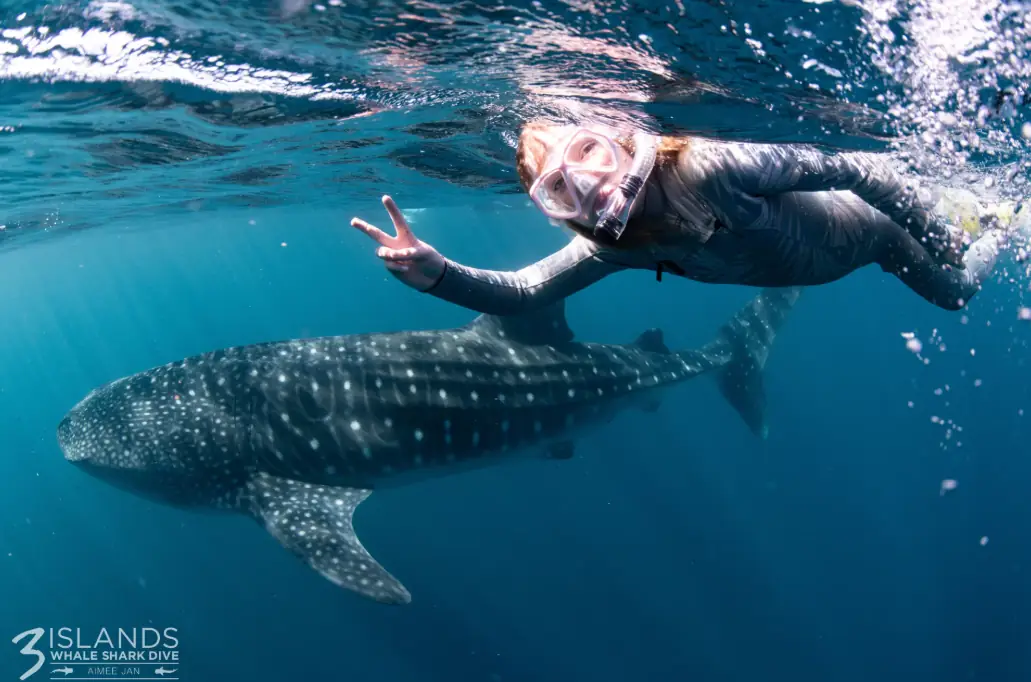
So, what is it like to swim with whale sharks? Calmer than most people expect. You slip off the back of the boat with a small group and your guide, float at the surface, and watch the largest fish in the ocean glide past at its own unhurried pace.
If it's your first time swimming with whale sharks, it's normal to feel excited and a little daunted at once. You might be wondering how close you can get to a whale shark, how long you'll swim with one, or whether you need much snorkelling experience.
Below, we walk through the in-water part of the day one moment at a time, from the warm-up reef snorkel to climbing back on board. Our whale shark swim experience is set up for first-timers and confident swimmers alike, and every swim follows the WA Government's rules for swimming with whale sharks.

Before you get in: reef snorkel, gear and briefing
It's tempting to want to get straight in with the whale sharks, but there are a few things to cover first so you feel prepared and comfortable before your first swim.
Our crew fit you with a wetsuit, mask and snorkel, then we start with a warm-up snorkel on the inner reef. It gives everyone a chance to get used to their gear and feel at ease in the water. It's also a chance to spot some of Ningaloo's other reef locals, from colourful fish to reef sharks, turtles and rays.
If you're not a confident swimmer, snorkel tuition and flotation aids are available, and our crew are always happy to offer a hand to hold. Once everyone's back on board, we warm up with hot drinks and morning tea while the crew run through the briefing for the day.
Out beyond the reef, our spotter-plane partners at Ningaloo Aviation search for whale sharks from the air. When they find one, they guide our skipper into position ahead of it. On the way out, the crew explain how the swims will work and split everyone into two groups, each with its own guide.

The call to get in and what happens at the back of the boat
On our whale shark tour Exmouth, guests are split into two groups of up to 10. When the spotter-plane finds a whale shark, the first mate moves onto the safety tender, and the skipper lines the boat up ahead of the whale shark, guided by the plane and the tender.
Meanwhile, the first group gears up and sits together on the marlin board at the back of the boat, waiting for the call. For many first-timers, this is when the nerves and the excitement kick in at once.
The photographer is the first to enter the water, to find the whale shark and see which direction it's travelling. Then your group slips in as quietly as possible, finds your guide and forms a line for the whale shark to swim past. You don't chase it; it comes to you.
Under Department of Biodiversity, Conservation and Attractions (DBCA) rules, no more than 10 people can be in the water with a whale shark at once. So our swimmers, up to 20 on board, take turns. The second group is dropped in ahead of the whale shark while the first group finishes their swim.

Your first sighting and swimming alongside a whale shark
The first time seeing the biggest fish in the ocean is a surreal moment and a tick off the bucket list. The shape will start to appear out of the blue, with its unique spot pattern, the wide mouth that opens for feeding, and the small fish travelling around the whale shark.
How close can you get to a whale shark?
Once you're level with the whale shark's pectoral fin, you swim alongside it and never in its path. The group can spread out in a loose U-shape beside and slightly behind the whale shark.
DBCA rules set the minimum distances: at least 3m from the whale shark's head or body and 4m from its tail. Swimmers must not touch the whale shark or restrict its normal movement, and flash photography and cameras on extension poles aren't allowed.
What if a whale shark turns towards you, or you get tired?
If the whale shark does turn towards you, the best procedure is to follow your guide's lead and calmly move aside to let it pass. If a whale shark banks or rolls, the crew will ask swimmers to give the creature more room.
If you get tired during the swim or you can't keep up, raise your hand, and the safety tender or a crew member will come to you.
How long do you swim with the whale sharks and what happens back on board?
How long each swim lasts depends on the whale shark: its speed, depth and whether it stays near the surface. The crew aims to give you as much time with the whale sharks as possible, with more swims through the day when conditions allow.
When it's time to finish a swim, your guide signals your group to stop. The photographer stays with the whale shark while the boat drops the second group in ahead of it, then comes back to pick your group up. You climb back on board via the marlin board at the back of the boat. If conditions allow, the crew then repositions the boat ahead of the whale shark as it cruises along the reef, and the two groups take turns for the next swim.
Don't worry about taking your own photos, either. Our photographer's photos of the day are free, so you can simply enjoy the moment.
Once the whale shark swims are done, it's time to dry off, warm up and celebrate with your group as we wave goodbye to the spotter-plane. If time allows, there may be some whale watching on the way back before we anchor inside the reef for lunch, and perhaps an afternoon snorkel. The day wraps up with afternoon tea (cheese, crackers and fruit) and a glass of bubbles, beer or soft drink to toast your first whale shark swim.
First-timer questions
If it's your first time swimming with whale sharks, you might still have a few questions about your snorkelling ability and what to expect from a whale shark encounter.
I've barely snorkelled before, can I still join in?
You don't need to be an experienced snorkeller. The morning reef snorkel, snorkel tuition and buoyancy aids are there so you can get comfortable before the swim. If you can, practise snorkelling at a pool or beach before your tour, so the mask and snorkel already feel familiar on the day.
What's the most common first-timer mistake?
Trying to swim ahead of the whale shark, or getting too close. Stay beside it, move slowly and calmly, listen to your guide and keep to DBCA distances.
What if I feel overwhelmed in the water?
Pause, breathe and float, then raise your hand and a tender or crew member will come to you. If you're worried about feeling overwhelmed, start with our tips on managing nerves and adrenaline.
Is swimming with whale sharks the same as scuba diving?
No, it's snorkel only. You stay at the surface with a mask, snorkel and wetsuit, so no dive certification is needed.
What if I get seasick?
If you're prone to seasickness, it's worth preparing before your tour, as you'll be cruising out beyond the reef. Here are our tips for preventing seasickness.
What should I bring on the day?
We supply wetsuits and snorkel gear, so you'll mainly need swimwear, a towel and reef-safe sunscreen. Check our whale shark tour packing list for the full rundown.
Ready for your first whale shark swim?
So, what is it like to swim with whale sharks? Calm, unhurried and unforgettable. Now you know what happens from the warm-up snorkel to the final swim, all that's left is to picture yourself on the marlin board, waiting for the call to slip in. Our crew will be with you from the first reef snorkel to the last climb back on board.
When you're ready, check current tour dates and book your spot. Our no-sighting policy applies, subject to tour terms.

Simon Buckingham
Simon Buckingham is one of two directors at 3Islands Whale Shark Dive. Having grown up at Rottnest Islands Simons affinity with the ocean started at a very young age. His working life spans 30 years of sales and marketing experience including several startup businesses. Now at 3islands he is combining his love of the ocean with his business background creating lifelong memories with guested from all over the world. Simons favourite experience is seeing guests form new friendships over a shared interaction in the water. “You can’t underestimate the power of the Whale Shark”
More...

Wondering How To Swim With Whale Sharks?
“Is it safe to swim with whale sharks?”
It’s a pretty common question – and we get it. The word “shark” generally comes with visions of a jagged fin poking gliding above water, razor-sharp teeth, and the Jaws theme song playing in the distance.

Why do Humpback Whales Breach?
When you think of humpback whales, their iconic breaching is likely one of the first things that come to mind. But why do humpback whales breach? This spectacular action, where whales launch themselves out of the water and crash back down, is fascinating. Let’s explore this behaviour and uncover why these marine mammals breach the…